Domiciliary care · England & Wales
Care at home, on your terms.
Kashfam Care provides compassionate domiciliary care and specialist learning-disability support for children, adults and older people — helping them stay independent, safe and comfortable in the home they love.

Our care
What domiciliary care actually is.
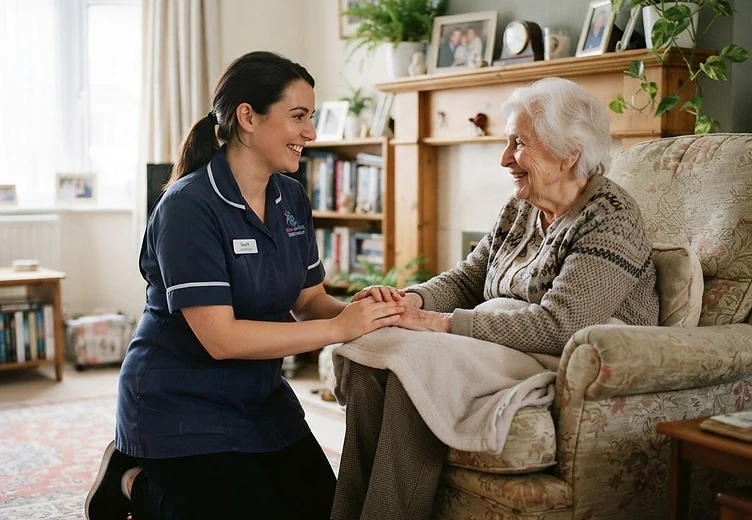
Domiciliary care means a trained carer visits someone at home to help with the things that have become difficult — a wash and get dressed in the morning, medication, a hot meal, shopping, or simply company. Visits can be as short as 30 minutes a few times a week, or several calls a day, and are always built around the person's own routine.
Stay in your own home
No move to a residential setting. Support comes to you, on your routines and in your own space.
One consistent carer
We match carers on skills, personality and language, and keep the same faces wherever possible.
Checked and trained
Enhanced DBS, references and mandatory training for every carer before a single visit.
Care types
The care we provide, explained.
Most people come to us not knowing which type of care they need — or that there is more than one. Each service below explains what it is and what the carer actually does, so you can see what fits.
Specialist care
For needs that go beyond everyday support.
Specialist care is planned support for people whose needs need a trained, informed approach — autism, a learning disability with behaviour that challenges, sensory processing differences, or a combination of these. Care is shaped around the individual by staff trained in that area, with input from the person's clinical team, and everyone delivering the care works to the same written plan.
What's involved
- Following positive behaviour support plans, with triggers, strategies and de-escalation agreed in advance
- Autism- and sensory-aware support — adjusting noise, lighting and routines, and allowing time to process
- Communication-led practice: Makaton, PECS, objects of reference and Easy Read
- Working alongside psychologists, speech and language therapists, occupational therapists and community teams
- Recording incidents, behaviour and what worked, so the plan keeps improving
- Supporting the person to take part in their community at their own pace
Learning disability support
Helping adults live the life they choose.
Support for adults with a learning disability, in their own home or a supported living setting — from a few hours a week of help with daily living to round-the-clock support. The person leads the plan, families are involved wherever they wish, and goals are set with the individual rather than for them.
What's involved
- Daily living skills: cooking, cleaning, laundry and personal care
- Budgeting, benefits paperwork and handling money safely
- Medication, health appointments and healthy routines
- Getting out and about — college, work, clubs, swimming and seeing friends
- Building independence step by step, at the person's pace
- Easy Read care plans and reviews with the person present
Complex nursing care
Clinical care, delivered at home.
For people with significant clinical needs who would rather stay at home than in hospital or a nursing home. Care is delivered by carers trained and competency-checked for each specific task, overseen by a registered nurse and working to the person's clinical care plan alongside their GP and community teams.
What's involved
- PEG feeding, stoma and catheter care, and tracheostomy support from trained staff
- Oxygen therapy, suctioning and ventilation support where prescribed
- Complex moving and handling, hoisting and repositioning
- Medication administration, including injections where prescribed
- Seizure monitoring and rescue medication
- End-of-life and palliative support, working with district nurses and hospices
- Clinical observations and escalation to the GP, community nurse or emergency services
Live-in care
A carer in the home, day and night.
A carer lives in the home and provides support through the day and overnight, so the person can stay where they are instead of moving into a care home. Usually one carer at a time, with a rota of familiar carers for continuity, a private bedroom, and agreed breaks built into the arrangement.
What's involved
- Personal care, bathing, dressing and continence support
- Cooking all meals, shopping, housework and laundry
- Medication, appointments and liaising with health professionals
- Companionship and help to keep up hobbies, faith and social life
- Overnight support — sleeping or waking, depending on the plan
- Daily notes, regular check-ins with family and a care manager review
- Cover for the carer's breaks and handovers, so support never stops
Waking night & sleep-in care
Reassurance through the night.
Overnight support for people who need help during the night — dementia, continence, pain, seizures or a risk of falls. A waking night carer stays awake and alert for the whole shift; a sleep-in carer rests overnight but is there if help is needed. Which one is right depends on the assessment.
What's involved
- Regular checks and repositioning through the night
- Toileting, continence care and changing bedding
- Pain relief and medication prompts where prescribed
- Responding to alarms, seizures or falls, and escalating when needed
- Recording sleep, incidents and concerns for the morning
- Handover to the day carers and family
What carers do
The duties of a care visit.
Every visit follows the person's agreed care plan. Duties are tailored to each individual and reviewed regularly, so support grows or reduces as needs change.
Personal care
Washing, dressing, grooming, toileting and continence support, always with dignity and privacy.
Medication support
Prompting and administering medication as prescribed, with every dose recorded on the medication record.
Meals and nutrition
Planning, preparing and serving meals, supporting hydration and respecting dietary and cultural needs.
Home and daily living
Light housework, laundry, shopping and keeping the home safe, clean and comfortable.
Mobility and community
Safe moving and handling, getting out to appointments, activities and social groups.
Companionship
Conversation, company and emotional support that reduces isolation and builds trust.
How it works
From first call to settled care.
- 01
Get in touch
Call or send an enquiry. We listen to what the person needs, who is involved and when support should start.
- 02
Free assessment
A senior member of the team visits the home to understand needs, routines, preferences, risks and goals.
- 03
Personal care plan
We write a clear plan with the person and their family, agreeing visit times, duties and who delivers them.
- 04
Matched carers
Vetted, trained carers are introduced and matched on skills, personality and language.
- 05
Care begins
Visits start with each task recorded, any concerns reported straight away and family kept informed.
- 06
Ongoing review
Care is reviewed after the first weeks and then regularly, and updated whenever circumstances change.
Keeping people safe
Vetted staff
Enhanced DBS, references, right-to-work and identity checks before any carer starts.
Trained and supervised
Mandatory training, spot checks and regular supervision for every carer.
Safeguarding first
Clear safeguarding and complaints procedures, with a named Registered Manager.
CQC — working towards registration.
The first step
A free assessment, in the home.
Before any care starts, a senior member of our team visits to understand needs, routines, medical conditions and what matters most to the person and their family. There is no charge and no obligation — you receive a written care plan and a clear quote in writing.
Book an assessment

Opening hours
- Monday – Friday
- 09:00 – 17:00
- Saturday
- 09:00 – 12:00
- Sunday
- Closed
- Bank holidays
- Closed
We are closed on bank holidays. Care visits already agreed for those days continue as planned.
On-call, 24/7
Outside office hours an on-call manager is available around the clock for emergencies — for example a missed visit, a fall, a hospital admission or an urgent change in someone's condition.
On-call 07366 605385For new enquiries during office hours, call 020 8036 4980.
Talk to us about care at home.
Our office is open Monday to Friday, 09:00 – 17:00, and Saturday 09:00 – 12:00. Outside those hours an on-call manager is available for emergencies.
adrian@kashfamcare.co.uk